Fall 2026 cohort
Faith Made Clear
A guided walk through the essential creeds of Islam, taken not as abstract theology but as convictions meant to be lived and reasoned through. Sessions work through the proofs behind revelation, so belief rests on understanding, not assumption.
- Teens, 13–18
- 8 weeks
- $160
Applications open
The Course in Brief
What do Muslims believe, how do we know it is true, and what difference should that certainty make?
Muslim belief is not a set of slogans to be repeated without understanding. The Islamic tradition has always called believers to know what they believe, how truth is recognized, why revelation is necessary, and how sound reason leads toward faith rather than away from it.
Faith Made Clear introduces the essentials of Sunni creed (aqidah) through selected passages from al-Aqidah al-Tahawiyyah, Qur’anic proofs, Prophetic teachings, and age-appropriate rational discussion. Students study the existence and attributes of Allah, prophethood, the truth of the Messenger صلى الله عليه وسلم, revelation, the Qur’an, the unseen, divine decree, human responsibility, and the life to come.
The course also introduces the historical circumstances in which formal creedal texts emerged, so students can see how early debates over God’s attributes, free will, revelation, faith, and grave sin led Sunni scholars to preserve and articulate the inherited beliefs of the Muslim community with care.
The purpose is not to produce young polemicists. It is to give students an ordered understanding of their faith, a language for sincere questions, and a foundation on which conviction can mature.
What the Student Will Learn
By the end, he should be able to
Explain why creed, or aqidah, is central to Islamic life.
Describe the roles of reason, revelation, reliable testimony, and human nature in acquiring knowledge.
Summarize why the early Sunni creeds were written, and the questions they addressed.
Present several accessible rational indications for the existence of God.
Explain divine unity, transcendence, perfection, and the proper approach to Allah’s attributes.
Explain why human beings need revelation, and how a true prophet is recognized.
Present the principal proofs for the prophethood of Muhammad صلى الله عليه وسلم and the truth of Islam.
Summarize Muslim belief concerning angels, revelation, divine decree, resurrection, judgment, Paradise, and Hell.
Discuss common questions about faith with intellectual humility and clarity.
Explain how sound belief shapes worship, character, courage, hope, and responsibility.
The Curriculum
Where the term travels
Four phases, each standing on the one before it. The full week-by-week syllabus follows underneath.
- Unit OneWeeks 1–2
How Truth Is Known
Faith, knowledge, certainty, doubt, evidence, reason, revelation, and reliable transmission. Students learn that the Islamic intellectual tradition does not ask them to choose between thinking and believing.
- Unit TwoWeeks 3–4
Knowing Allah
Accessible proofs for God’s existence, followed by divine unity, perfection, transcendence, the attributes, and the limits of human imagination.
- Unit ThreeWeeks 5–6
Revelation and Prophethood
Why revelation is necessary, what qualities belong to prophets, how miracles function as signs, and how the Qur’an, along with the life, character, and message of Muhammad صلى الله عليه وسلم, testifies to his truthfulness.
- Unit FourWeeks 7–8
The Unseen and the Life of Conviction
Divine decree, human responsibility, angels, the afterlife, and judgment, closing with how creed changes the way a Muslim worships, suffers, hopes, acts, and understands his place in the world.
Week by Week
The full syllabus
8 weeks, each with what is studied and what is attempted before the next one. Open any week.
Week 01Belief, Knowledge, and Certainty
Do I actually believe this, or have I only inherited it?
What aqidah means and why belief matters; the difference between inherited familiarity and understood conviction; the sources of knowledge; and the relationship between sound reason and authentic revelation.
ExerciseA private question inventory: what do I believe, and what do I still need to understand?
By the end of this weekDistinguish inherited familiarity from understood conviction, and name the sources of knowledge Islam actually appeals to.
Week 02Why Muslim Creeds Were Written
Why did Muslims ever need to write their beliefs down?
Creed in the Qur’an and Sunnah; the belief of the earliest Muslim community; the appearance of theological disputes; the purpose of concise creedal texts; and an introduction to Imam al-Tahawi and al-Aqidah al-Tahawiyyah.
Questions introducedDivine decree, the attributes of Allah, the nature of faith, grave sin, and revelation.
By the end of this weekSummarize the early disputes that made creedal texts necessary, and say who Imam al-Tahawi was and what his creed is for.
Week 03Does God Exist?
Can the existence of God be reasoned toward, or only felt?
Fitrah, existence and dependence, causation, contingency, order, intelligibility, and moral awareness. Students learn how rational arguments function, and what they can and cannot establish.
ExerciseConstructing and explaining a simple argument, rather than memorizing its conclusion.
By the end of this weekBuild and explain one accessible argument for God’s existence, and state honestly what such arguments can and cannot establish.
Week 04Who Is Allah?
What can be said about Allah, and where must speech stop?
Divine unity, perfection, transcendence, knowledge, will, power, life, speech, and freedom from created limitation, and the Sunni method of affirming revelation without likening Allah to creation or emptying revelation of meaning.
Primary readingsSelected statements from al-Tahawiyyah concerning Allah and His attributes.
By the end of this weekExplain divine unity, perfection, and transcendence from al-Tahawiyyah’s own statements, without likening Allah to creation or emptying the words of meaning.
Week 05Why Revelation and Prophets?
If God exists, why would He speak to us at all?
The limits of unaided reason; humanity’s need for divine guidance; the qualities of prophets (truthfulness, trustworthiness, intelligence, transmission, and protection); and the meaning and function of miracles.
By the end of this weekExplain why unaided reason needs revelation, list the qualities of prophets, and describe how a miracle functions as a sign.
Week 06Why Believe Muhammad صلى الله عليه وسلم and the Qur’an?
Why believe this Prophet, and this Book?
The Prophet’s life, character, consistency, message, sacrifice, fulfilled signs, and transformative influence; and the transmission, preservation, language, coherence, and inimitability of the Qur’an.
ExerciseA structured case for prophethood, built from several independent forms of evidence.
By the end of this weekAssemble a structured case for prophethood from several independent lines of evidence, and explain the Qur’an’s preservation and inimitability.
Week 07Destiny, Responsibility, and the Unseen
If Allah already knows, how am I still responsible?
Divine knowledge and decree, human choice and accountability, wisdom in suffering, angels, resurrection, judgment, Paradise, Hell, and the life of the grave.
Primary readingsSelected passages from al-Tahawiyyah concerning decree and the hereafter.
By the end of this weekState the Sunni position on decree and human responsibility, and summarize what Muslims hold about the grave, resurrection, and judgment.
Week 08Living What We Believe
What difference should certainty make on a hard day?
Faith and action; certainty during difficulty; hope and fear; responding to questions without panic; the difference between a passing question and corrosive doubt; and how belief shapes worship, character, purpose, and courage.
Final project“What I Believe and Why”: a written or spoken creed map explaining the central beliefs studied and the evidence or meaning behind each.
By the end of this weekPresent a personal creed map covering what he believes, why, and what remains beyond human knowledge, and tell a passing question apart from corrosive doubt.
How Learning Is Practiced
Students engage the material through:
- Guided readings from selected passages of al-Aqidah al-Tahawiyyah.
- Qur’anic and Prophetic proof texts.
- Historical maps of the early theological questions.
- Argument diagrams and reasoning exercises.
- Open question-and-answer periods.
- Case studies drawn from common contemporary questions.
- Short written reflections.
- A final personal creed map.
Questions are welcomed and taken seriously. The instructor distinguishes plainly between what this course can answer, what requires more advanced study, and what remains beyond the limits of human knowledge.
Primary text
Selected foundational passages from al-Aqidah al-Tahawiyyah
Supporting material
Qur’anic passages, Prophetic teachings, short selections from early Sunni creedal formulations, instructor-prepared historical timelines, proof maps, and student worksheets.
The course is organized around selected foundational passages; it does not attempt an exhaustive study of the entire Tahawiyyah in eight sessions.
By the End
A diligent student should hold an ordered map of Sunni belief, understand several of the principal reasons Muslims hold those beliefs to be true, and be better prepared to meet sincere questions with thoughtfulness rather than fear. He should leave seeing how conviction gives direction to worship, character, hope, and life, beyond knowing a list of doctrines.
How It’s Taught
This is a course where questions are welcome; the proofs and methods of theology are the curriculum, so conviction is reasoned into, not assumed.
Online, live cohort. 10 students maximum.
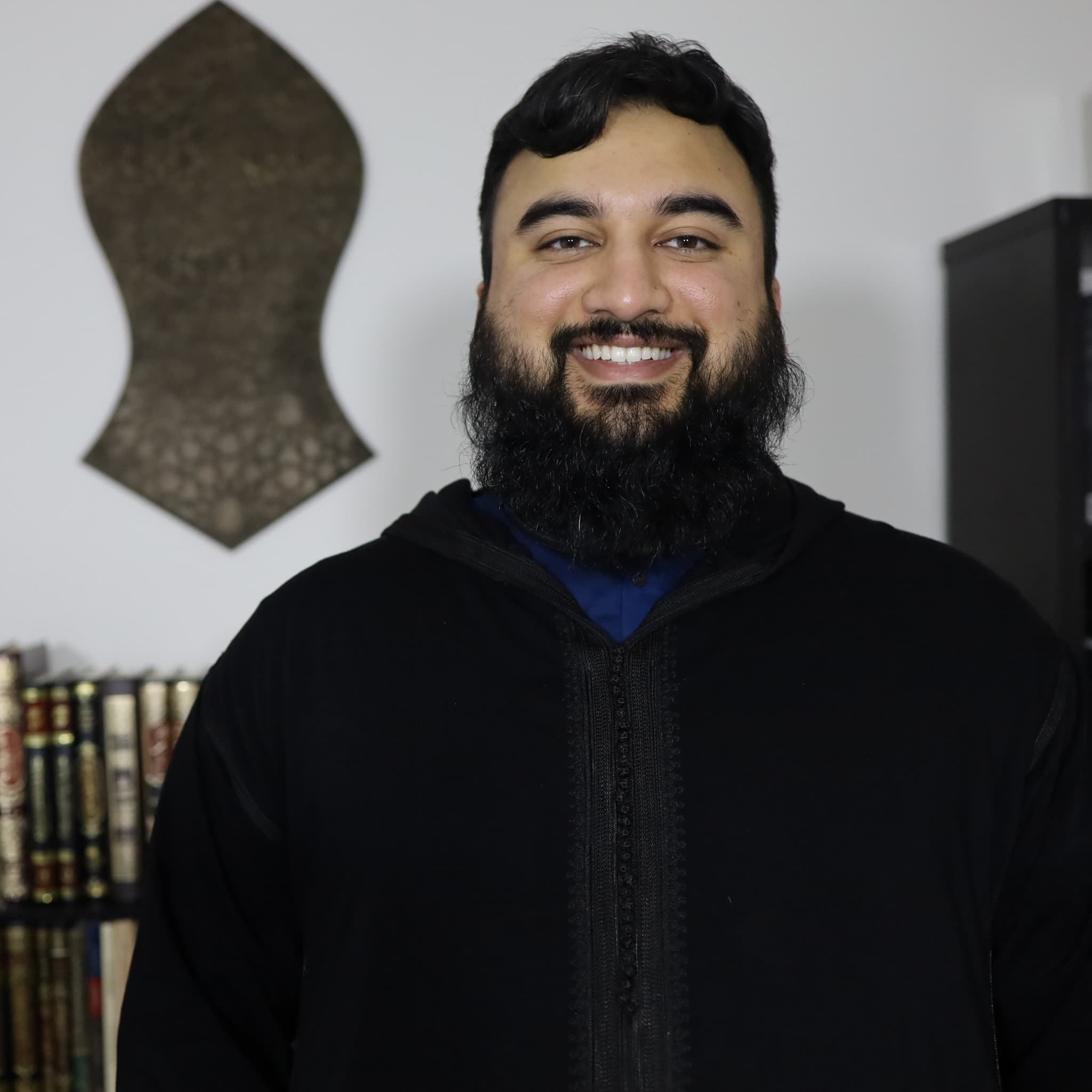
Taught by
Irslan Ahmad
Founder & Lead Instructor
A Hafiz of the Qur’an with an ijazah in the mode of Hafs ‘an ‘Asim, a Master of Arts in Islamic Studies from Bayan Islamic Graduate School, and continuing ‘Alimiyyah study at Darul Qasim College. He teaches this course himself, every week, start to finish.
Read the full biographyThe Details
- Who it’s for
- Young men
- Age
- Teens, 13–18
- Instructor
- Irslan Ahmad
- Format
- Online, live cohort
- Starts
- To be announced
- Applying
- Applications close two weeks before the first session
- Schedule
- Sundays, 1:00–2:30 PM Central
- Length
- 8 weeks
- Class size
- 10 students maximum
- Outside class
- 30–45 minutes of reading and a short written reflection
- Tuition
- $160
Tuition & Terms
No sincere student is turned away from our student programs for inability to pay. If tuition is the obstacle, write to us before applying, or request a scholarship and we’ll find a way forward.
Refunds: full before the first session, prorated after the first session but before the second, and none once the second session begins; see our Terms of Use.
Ready to join this cohort?
Classes are kept small, so a seat is a commitment on both sides. Apply below and we’ll confirm your place.
Other Courses